For sixty years the Los Angeles River was mostly a punchline — a concrete flood-control channel dressed up as a drag strip in one movie, a gang stand-off in another, seven miles of grey trapezoid that Angelenos drove over without looking down. Walk the stretch between Frogtown and the Arts District today and the punchline stops landing: herons stand in the shallows, commuters cycle the service road at rush hour, and a small guided kayak fleet paddles through the middle of it every summer.
The channel itself is a product of catastrophe, not neglect: the flood of 1938 killed dozens of people across the basin and displaced thousands, and within a few years the Army Corps of Engineers had encased virtually the entire fifty-one-mile river in concrete. That's worth carrying into this walk — everything below, the parks, the kayak tours, the herons, is a slow, deliberate undoing of an emergency decision made nearly ninety years ago. This is a walk with two distinct halves: a soft-bottomed, willow-lined northern reach through a neighbourhood still arguing with itself about what it's becoming, and a hard turn south, under a landmark bridge, into a gallery district built on old rail yards.
Frogtown: the river's front porch
Frogtown — officially Elysian Valley, a name most locals have quietly retired — sits in the crook of the river a few minutes from Downtown, a strip of small industrial lots and 1920s bungalows that has spent the last decade filling in with bike shops, ceramics studios and cafés with the roll-up doors left open. It's the kind of neighbourhood a walk should start slow in, with coffee.
Spoke Bicycle Cafe (Frogtown) opened in 2015 as the first café built directly onto the river path, and it still functions as the easiest mid-walk refuel on this whole route: counter service, no reservations, and a genuine welcome for cycling groups and tour parties passing through. A coffee and a sandwich runs roughly $8-16. It isn't a destination in itself so much as a reliable comma in the sentence — somewhere to sit with your bike leaned against the fence and watch the path traffic.
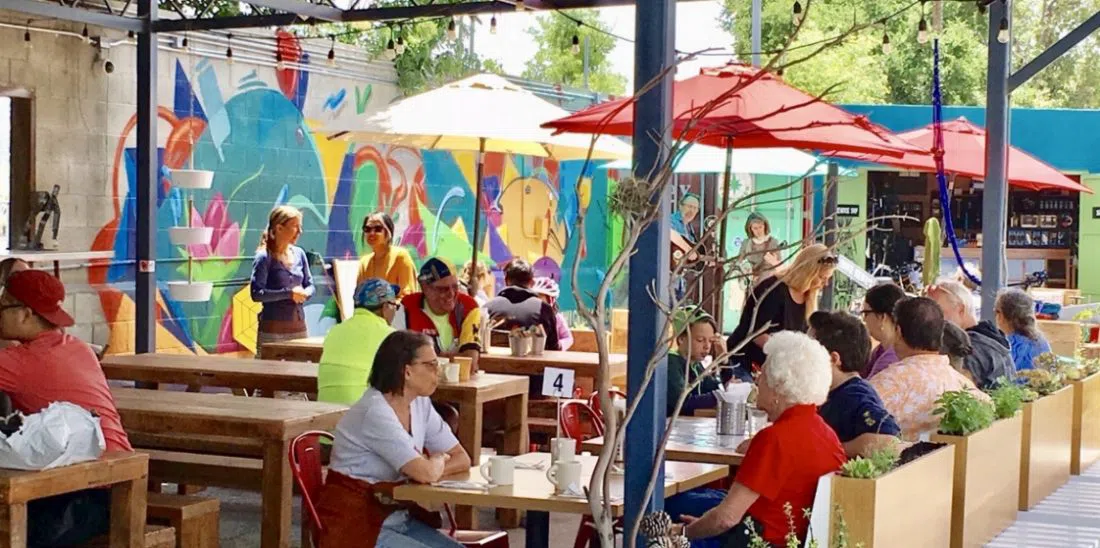
A short detour off the river, Wax Paper Frogtown (Frogtown) has become the neighbourhood's cult lunch stop — sandwiches at $16-20 that regulars will tell you are worth the trouble. Be honest with yourself about the trouble: it's a small counter with no formal group service, and the wait genuinely runs 30-40 minutes on a normal afternoon. Fine for two people willing to linger; a poor choice for a group on a schedule.
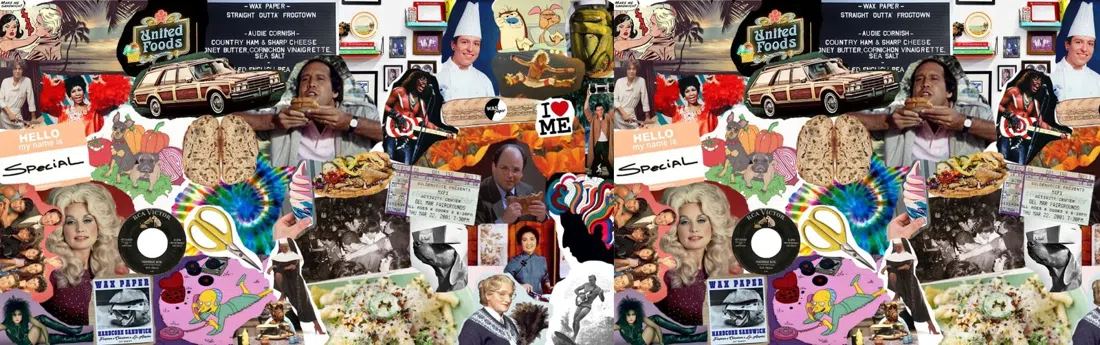
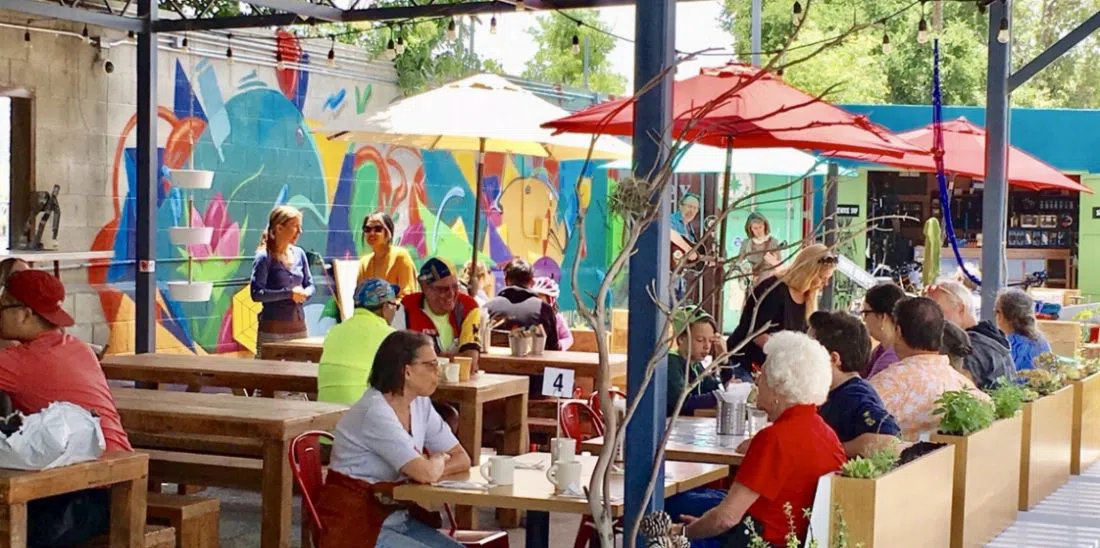
For something closer to a proper sit-down meal, Salazar (Frogtown) is a block off the river and hard to miss once you've seen a photo of its patio — long communal tables under string lights, a wood fire going, mesquite-grilled Sonoran-style Mexican food that runs from $4 tacos to $19-54 mains. It takes reservations and handles bigger groups without fuss, which makes it the natural lunch or dinner anchor for anyone walking with more than two or three people.
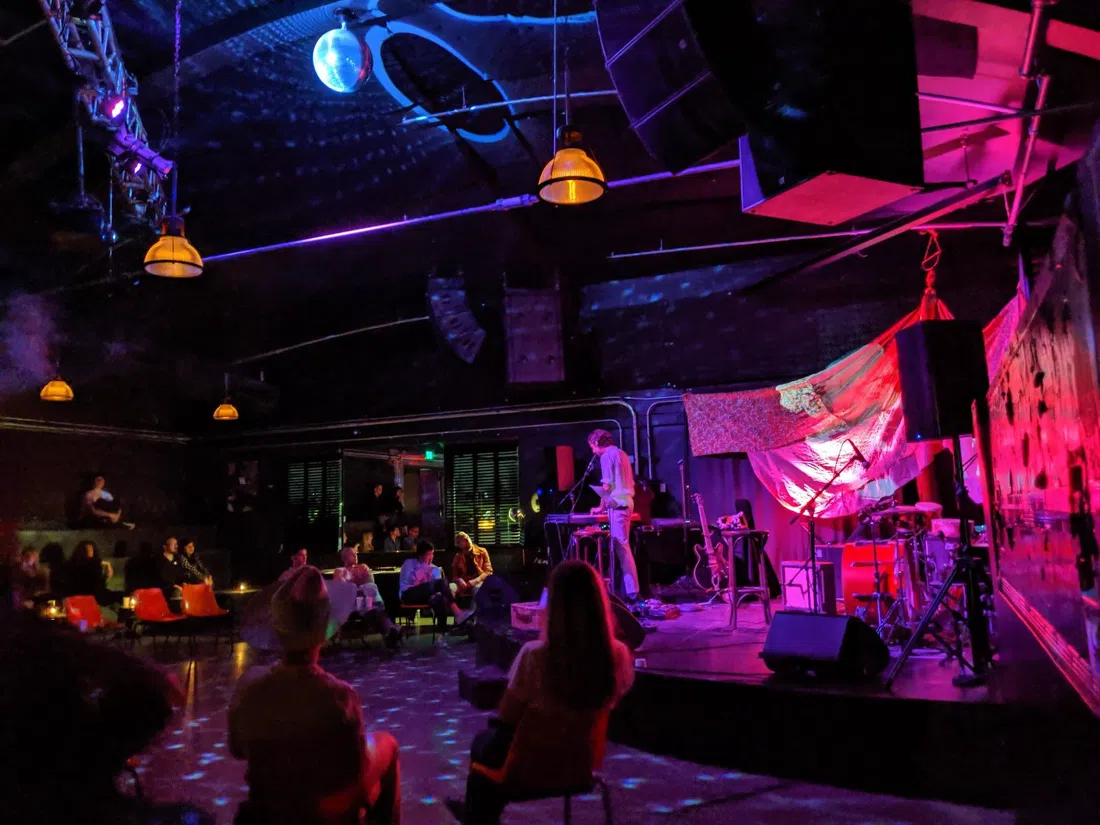
If the walk stretches into evening, Zebulon (Frogtown) is worth building the schedule around rather than dropping in on. It relocated here in 2017 and has become a genuine neighbourhood institution for live music — cover runs free to $25 depending on the night, and while it does take private and group bookings, they're built around its live calendar, so check what's on before committing a group to it.
Three parks that prove the river is alive
Between the cafés, the actual river work happens in three small public parks — all free, all fine for groups, none of them trying to be more than what they are.
Rattlesnake Park, also signed as the Great Heron Gates (Frogtown), is the main pedestrian and kayak gateway into the river's summer recreation zone — this is where the water access genuinely starts, and where a walking group can first stand at the rail and watch the current instead of reading about it.
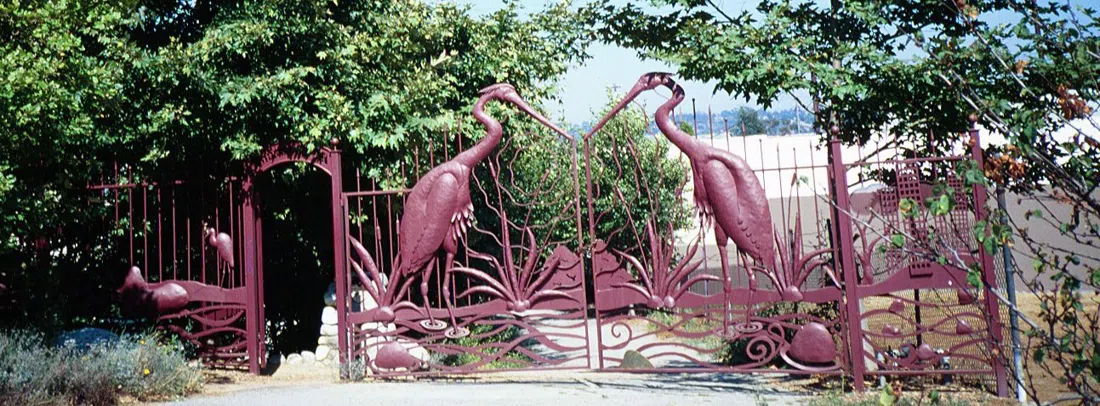
A little further along, Lewis MacAdams Riverfront Park (Elysian Valley) carries the name of the Friends of the LA River co-founder who spent decades arguing this channel was worth saving before anyone else took it seriously. It was renamed for him after the 'Marsh Park' era, and 2026 maps and signage should carry the current name, not the old one.
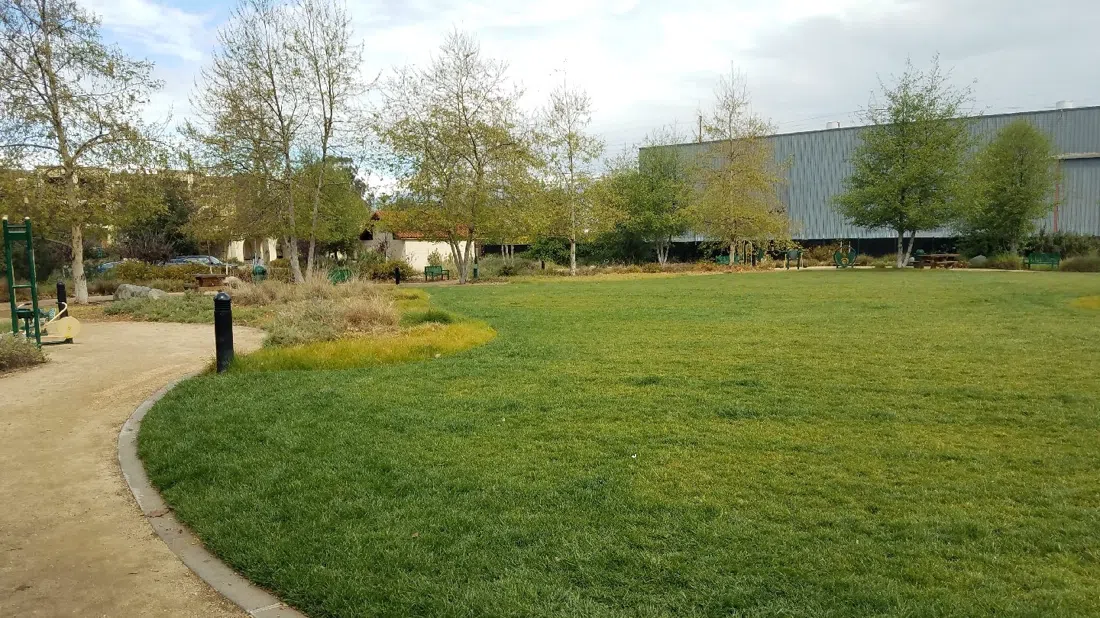
Steelhead Park (Elysian Valley) is smaller and quieter than the other two, named after the native fish that river advocates hope will one day spawn back up this stretch — a small, useful reminder that the walk passes through an active restoration project, not a finished one.
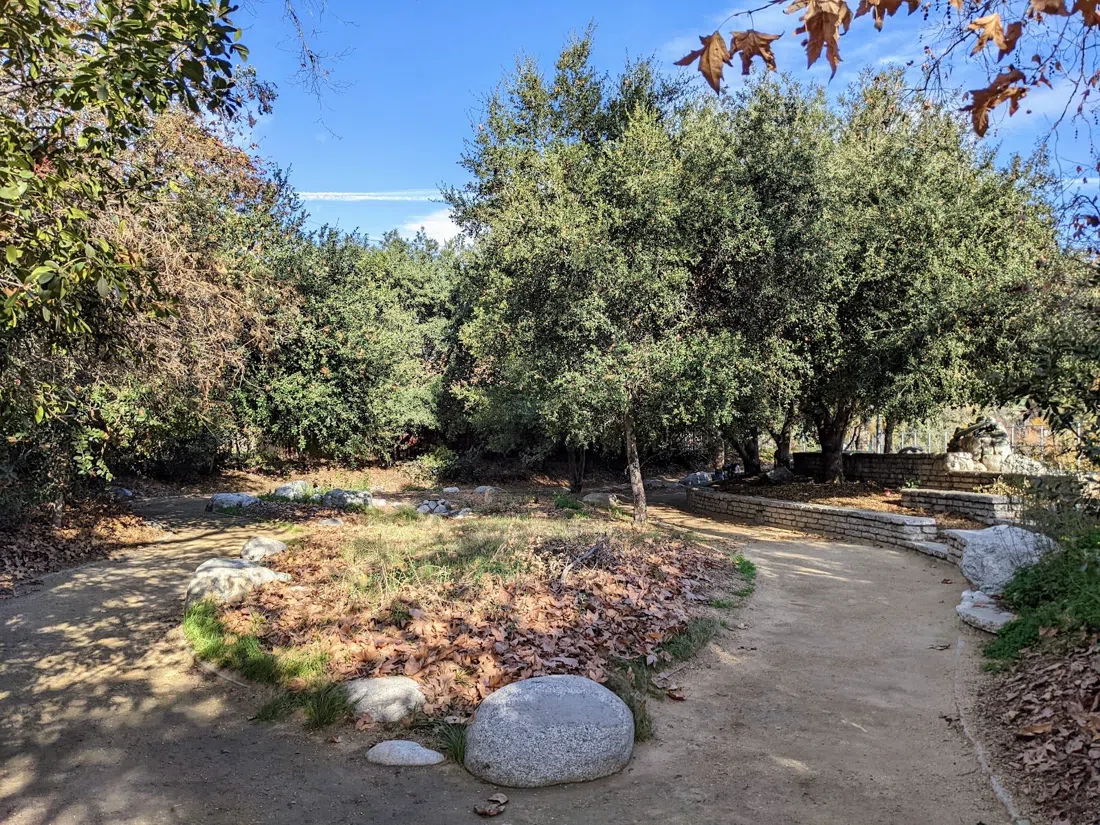
On two wheels, and briefly on the water
The spine of the entire route is the LA River Bike Path (Glendale Narrows) — free, open to everyone, and popular enough with walking and cycling tour groups that on a weekend morning it can feel more like a linear park than a flood channel. This is the exact stretch that quietly contradicts the old 'dead concrete ditch' image: a soft, vegetated riverbed with a paved path running alongside it, herons and egrets working the shallows, cyclists commuting past joggers past photographers.
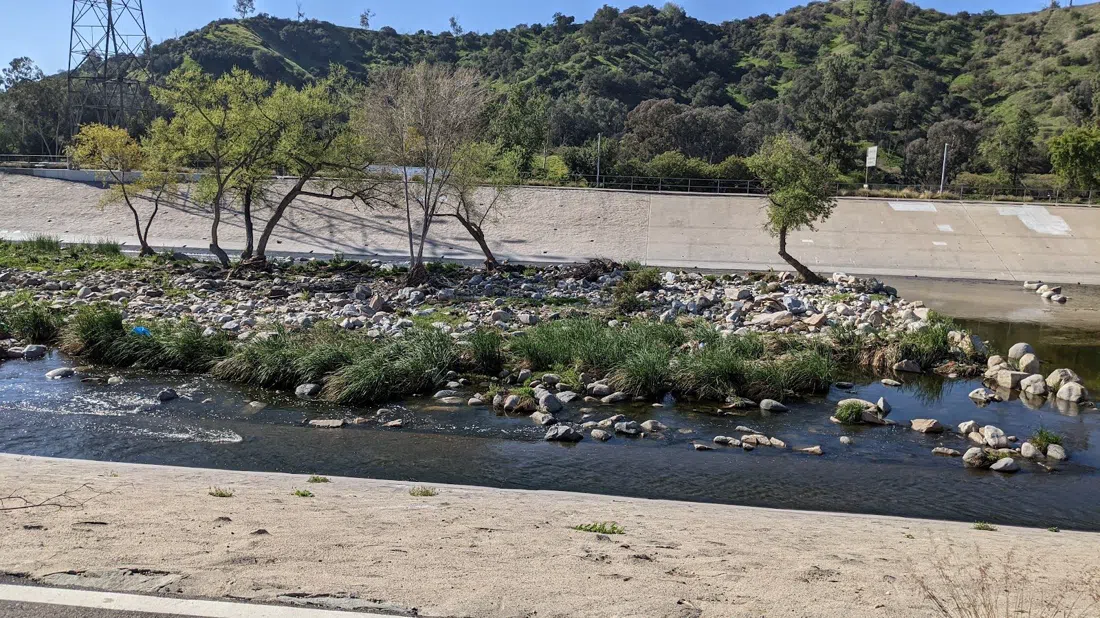
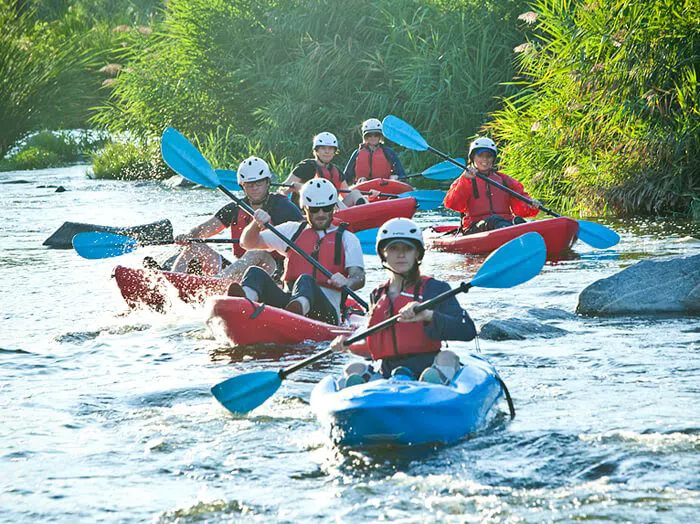
Between Memorial Day and mid-September 2026, the more memorable way to experience the same water is from inside it. LA River Kayak Safari (launching near Rattlesnake Park, Frogtown) runs small guided-group tours, bookable for private groups, at roughly $60-90 per person — genuinely the way onto the water that the movies spent decades insisting didn't exist. It's seasonal and weather-dependent, so this is one booking on the route worth locking in ahead of arrival rather than deciding on the day.
Crossing under a landmark: the Sixth Street Viaduct
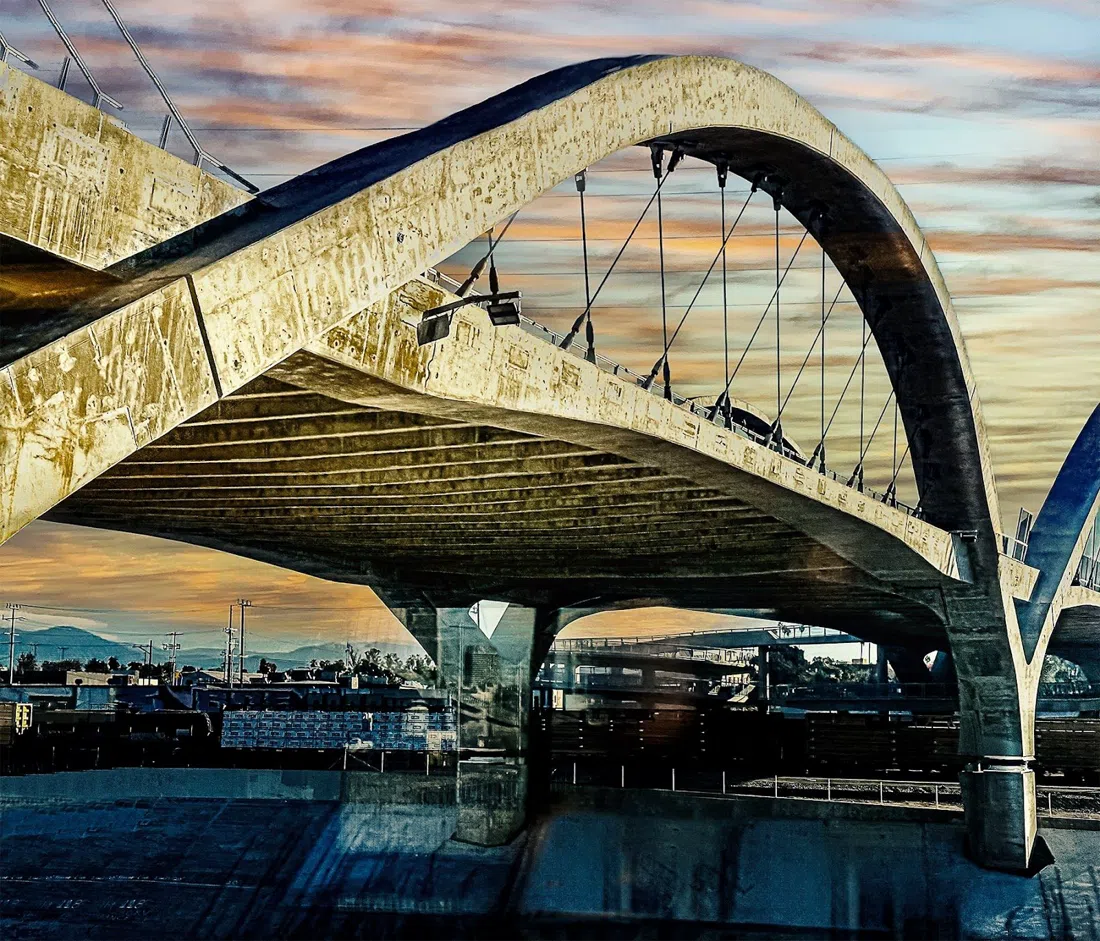
South of Frogtown, the walk leaves the soft-bottomed Glendale Narrows behind and the channel goes back to hard concrete, which is where the route's second landmark takes over. The Sixth Street Viaduct (Arts District) has been open, and fairly quickly iconic, since 2022 — its double arches are already one of the more photographed pieces of infrastructure in the city. The park being built underneath it, known as the PARC, is still finishing construction as of 2026, with a grand opening slated for later in the year; treat it as a 'coming soon' on this walk rather than a stop to build time around, and don't be surprised to find fencing and equipment still in place.
The Arts District: galleries first, dinner after
Once you're across, the walk changes register entirely — from riverside path to former rail yards and warehouse blocks, the Arts District, a neighbourhood that has spent the last decade turning its industrial bones into galleries, roasters and some of the more talked-about restaurants in the city.
SCI-Arc Gallery (Arts District) is the easy, free first stop: an architecture-school gallery, good for groups, that eases the transition from open-air river walk to indoor culture without asking anything of your schedule or your wallet.
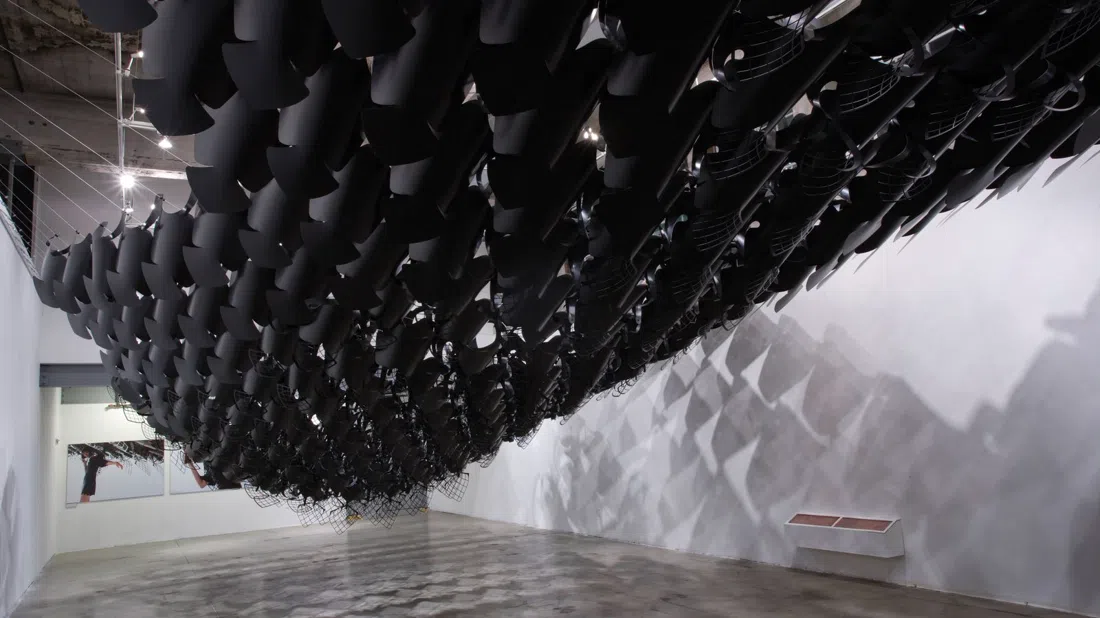
Hauser & Wirth Los Angeles (Arts District) is the anchor of the neighbourhood's gentrification story, established in 2016 and still the reason a lot of visitors come this far south at all — free, welcoming to groups, and worth checking opening days for, since it closes Mondays.
Inside the same grounds but run separately from the gallery, Manuela (Arts District) takes reservations for groups and sits at the $$$ end of the walk — book ahead if you want a table rather than a walk-in.
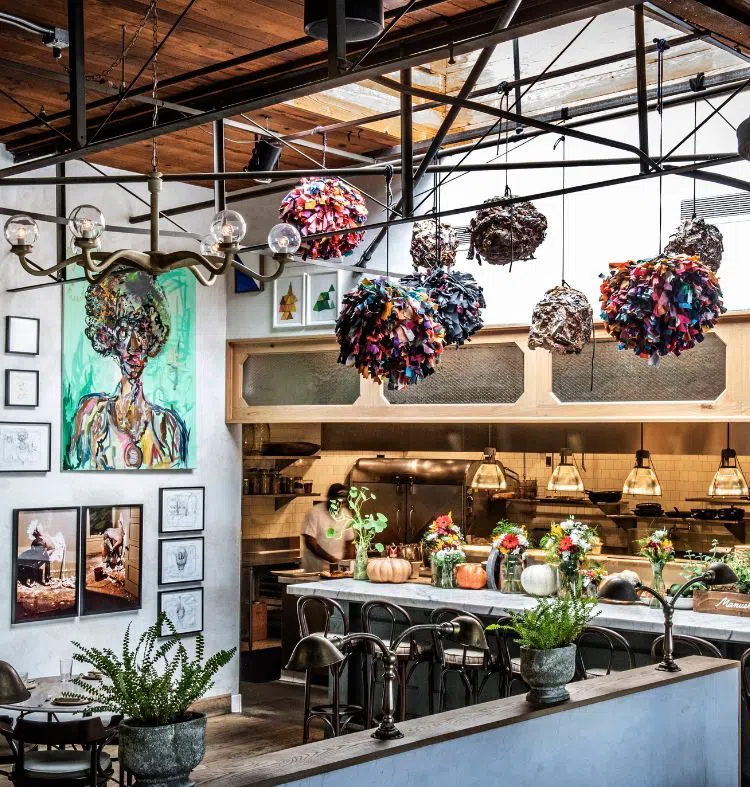
A few blocks over, Bestia (Arts District) is the restaurant most credited with kick-starting Arts District dining back in 2012, and it remains, by reputation, the hardest table to get in the neighbourhood — book well ahead if a group dinner here is the plan, not the day before.
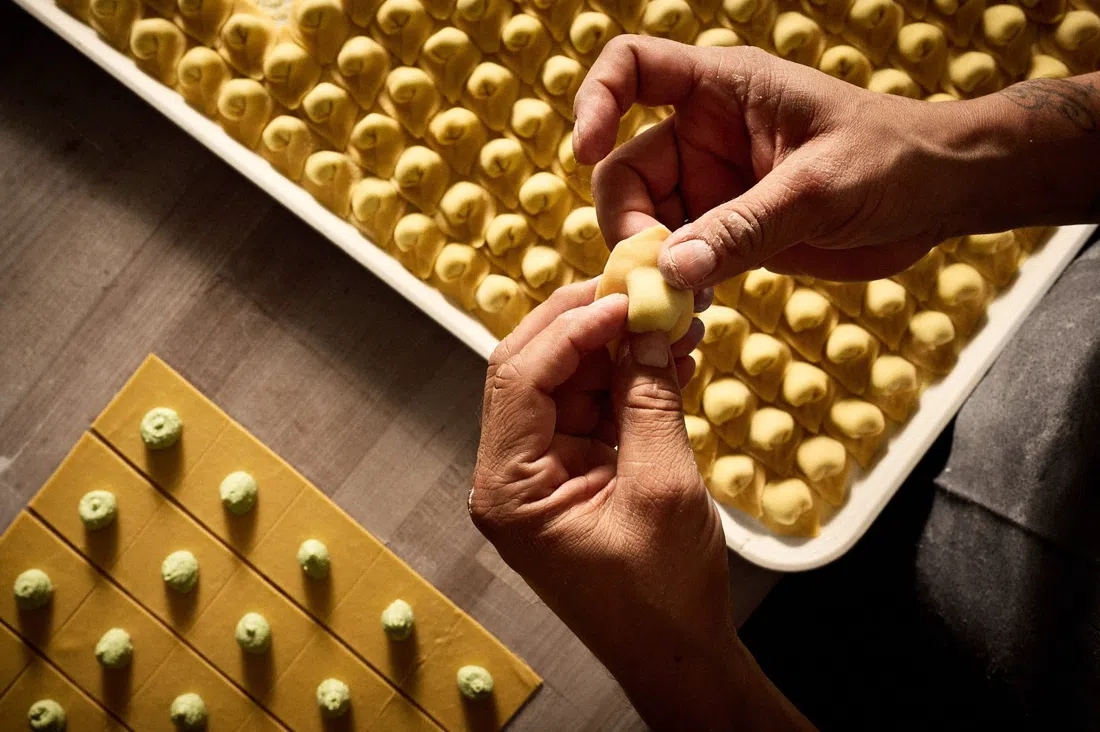
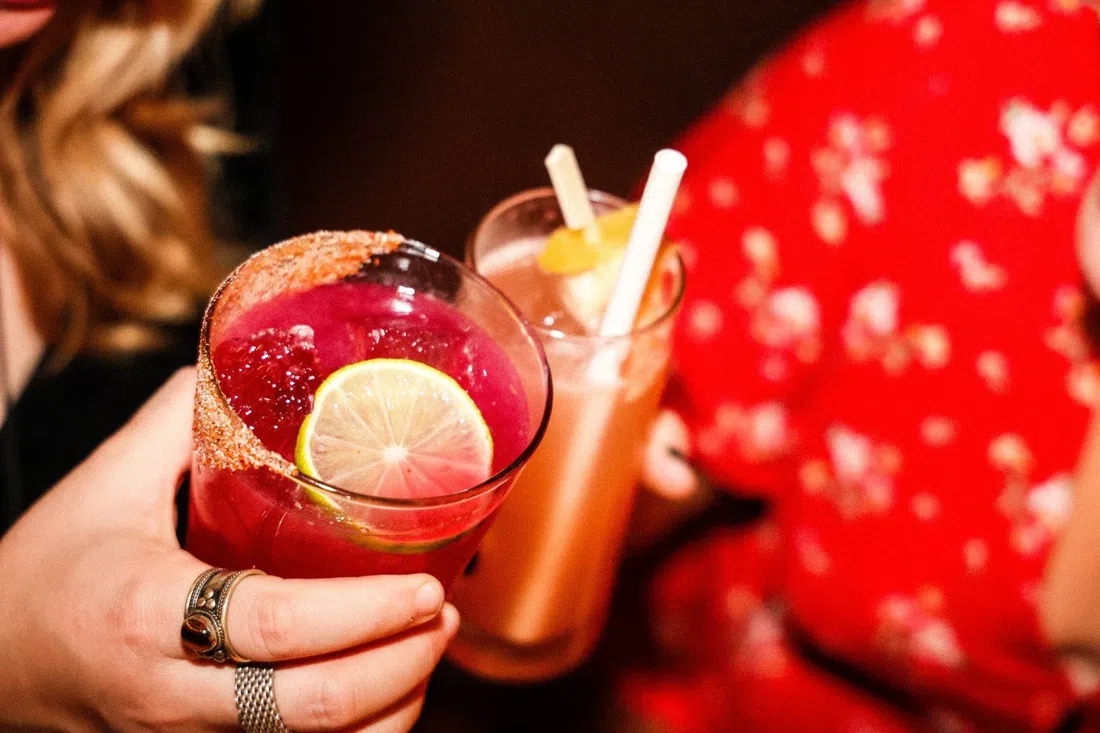
To close the walk without the pressure of a tasting-menu reservation, Everson Royce Bar (Arts District) is the more relaxed option: a spacious patio that suits groups, closed Monday and Tuesday, and generally regarded by locals as the neighbourhood's best patio for exactly that reason — a natural place to sit down, order a round, and let the walk end on its own terms.
Practical notes
Distance and pacing. Frogtown to the Arts District, following the river path and then crossing the Sixth Street Viaduct, runs a comfortable half-day on foot with stops, or a couple of hours if you're doing it mostly by bike and treating the cafés as brief pauses rather than meals.
Transport. This is a walking-and-transit route by design — the river path itself has no car access, and neither Frogtown nor the river-adjacent stretch of the Arts District is built around parking. Downtown's Metro rail network and rideshare comfortably cover both ends; a car is only useful for the return trip or for reaching the very start of the path in Frogtown, where street parking is limited and residential.
Cash and cards. Everything on this route takes cards; carry a little cash only as backup for smaller counters like Spoke or Wax Paper on a busy day.
Timing. Mornings suit the river path and parks — cooler, quieter, better light for the herons. Afternoons suit the galleries. Evenings belong to Frogtown's Zebulon or the Arts District's restaurant row; the walk itself has no lighting to speak of after dark, so plan to be off the river path by dusk.
Budget. A frugal version of this day — coffee at Spoke, a park stop, the bike path, SCI-Arc and Hauser & Wirth — costs almost nothing beyond transit. Add the kayak safari and a group dinner at Salazar or Bestia and it becomes a proper splurge day; there's very little in between.
Where to stay. For a base within reach of both ends of the walk, start with the Los Angeles hotel search, and for the wider city context around this one walk, the full Los Angeles guide covers what else the city does well beyond its river.